1 Heavy-load eccentric calf muscle training for the treatment of chronic Achilles tendinosis Heavy-load eccentric calf muscle training for the treatment of chronic Achilles tendinosis | 1998 | 12-week heavy eccentric calf program for chronic mid-portion Achilles pain. | Grinding, painful eccentrics can drive big improvements in stubborn Achilles tendinopathy. | If you treat runners or back‑row forwards without knowing this paper, your tendinopathy game is half-baked, sorry not sorry… fight me. |
|---|
2 Efficacy of heel lifts versus calf muscle eccentric exercise for mid-portion Achilles tendinopathy (HEALTHY): a randomised trial Efficacy of heel lifts versus calf muscle eccentric exercise for mid-portion Achilles tendinopathy (HEALTHY): a randomised trial | 2021 | Compares in-shoe heel lifts against classic eccentric loading for mid-portion Achilles. | Heel lifts can edge eccentrics on short-term pain and function, but both are legit options. | This is why I don’t die on the Alfredson-only hill; some patients just want a sneaky heel lift and to get on with life… fight me. |
|---|
3 Terminology and classification of muscle injuries in sport: the Munich consensus statement Terminology and classification of muscle injuries in sport: the Munich consensus statement | 2013 | Standardises terms and grading for acute muscle injuries in sport. | Not all ‘tears’ are equal; good language and grading make prognosis and RTP timelines less guessy. | If your match report still just says ‘grade 1 strain’ with no nuance, you’re living in the physio dark ages… fight me. |
|---|
4 Has the athlete trained enough to return to play safely? The acute:chronic workload ratio permits clinicians to quantify a player's risk of subsequent injury Has the athlete trained enough to return to play safely? The acute:chronic workload ratio permits clinicians to quantify a player's risk of subsequent injury | 2016 | Introduces the acute:chronic workload ratio as a way to link training spikes to injury risk. | Big week-on-week load jumps are asking for trouble; spikes matter more than magic exercises. | I’d rather a slightly undercooked player with smooth loads than a ‘fitness test hero’ coming off a spike… fight me. |
|---|
5 How much is too much? (Part 1) International Olympic Committee consensus statement on load in sport and risk of injury How much is too much? (Part 1) International Olympic Committee consensus statement on load in sport and risk of injury | 2016 | Global overview of how training and competition load relate to injury in athletes. | It’s not load that’s evil, it’s badly managed load; smart progression is protective, not dangerous. | Any coach saying ‘we got injured because we trained too hard’ needs to swap that line for ‘we progressed like cowboys’… fight me. |
|---|
6 Debunking the myths about training load, injury and performance: empirical evidence, hot topics and recommendations for practitioners Debunking the myths about training load, injury and performance: empirical evidence, hot topics and recommendations for practitioners | 2020 | Takes common beliefs about load and injury and checks them against actual data. | Simple stories like ‘more load = more injury’ just don’t hold; context, capacity and history rule. | If your load chat fits on a motivational quote tile, it’s not evidence-based programming, it’s vibes… fight me. |
|---|
7 Large eccentric strength increase using the Copenhagen Adduction exercise in football: a randomized controlled trial Large eccentric strength increase using the Copenhagen Adduction exercise in football: a randomized controlled trial | 2016 | Tests the Copenhagen adduction exercise on hip adductor strength in male footballers. | A simple bodyweight side plank variation can seriously boost adductor strength, a key groin risk factor. | If your wingers aren’t doing Copenhagens, don’t act surprised when the groins go during the Christmas fixture pile-up… fight me. |
|---|
8 Efficacy of the FIFA 11+ Warm-Up Programme in Male Youth Football: A Cluster Randomised Controlled Trial Efficacy of the FIFA 11+ Warm-Up Programme in Male Youth Football: A Cluster Randomised Controlled Trial | 2014 | Checks whether the FIFA 11+ warm-up cuts injuries in male youth football teams. | Boring-looking neuromuscular warm-ups, done consistently, quietly slash injury incidence. | Every academy arguing they’re ‘too elite’ for 11+ is choosing highlight drills over healthy knees… fight me. |
|---|
9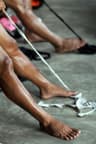 Effect of Pre-training and Post-training Nordic Exercise on Hamstring Injury Prevention, Recurrence, and Severity in Soccer Players Effect of Pre-training and Post-training Nordic Exercise on Hamstring Injury Prevention, Recurrence, and Severity in Soccer Players | 2019 | Looks at how adding Nordics before or after training affects hamstring injury rates. | Nordics help with both first-time and repeat hammy issues when you actually program and progress them. | If you call Nordics ‘too sore’ but happily send lads into back-to-back sprints, your risk-reward radar is broken… fight me. |
|---|
10 ACL Return to Sport Guidelines and Criteria ACL Return to Sport Guidelines and Criteria | 2017 | Reviews measurable strength, hop, and psychological criteria for return to sport after ACL reconstruction. | Time from surgery is useless alone; objective strength, function and confidence should drive clearance. | Clearing an ACL at six months ‘because the season starts’ is not athlete-centred care, it’s wishful thinking in club colours… fight me. |
|---|
 TheLysts