Northern China. Not one wall but centuries of fortifications stitched together — the scale is the wonder. Mutianyu is the section to walk if you want the views without the crowds.
Mutianyu Village, Huairou District, Beijing, China
China
7th c. BC – 17th c. AD
Sheer scale — thousands of kilometres of defensive engineering across two millennia
Nabataean trading city carved straight into rose-red sandstone. You approach through the Siq, a narrow 1.2 km canyon that opens onto the Treasury facade — one of the great reveals in architecture.
Petra Archaeological Park, Wadi Musa, Ma'an Governorate, Jordan
Jordan
c. 5th c. BC
Architecture subtracted from rock rather than built on top of it
38 m of Art Deco soapstone and concrete on Corcovado, arms open over Rio. The youngest wonder on the list and the one that most defines its city's silhouette.
Parque Nacional da Tijuca, Alto da Boa Vista, Rio de Janeiro, RJ, Brazil
Brazil
1922–1931
The modern entry — a 20th-century icon that became shorthand for an entire country
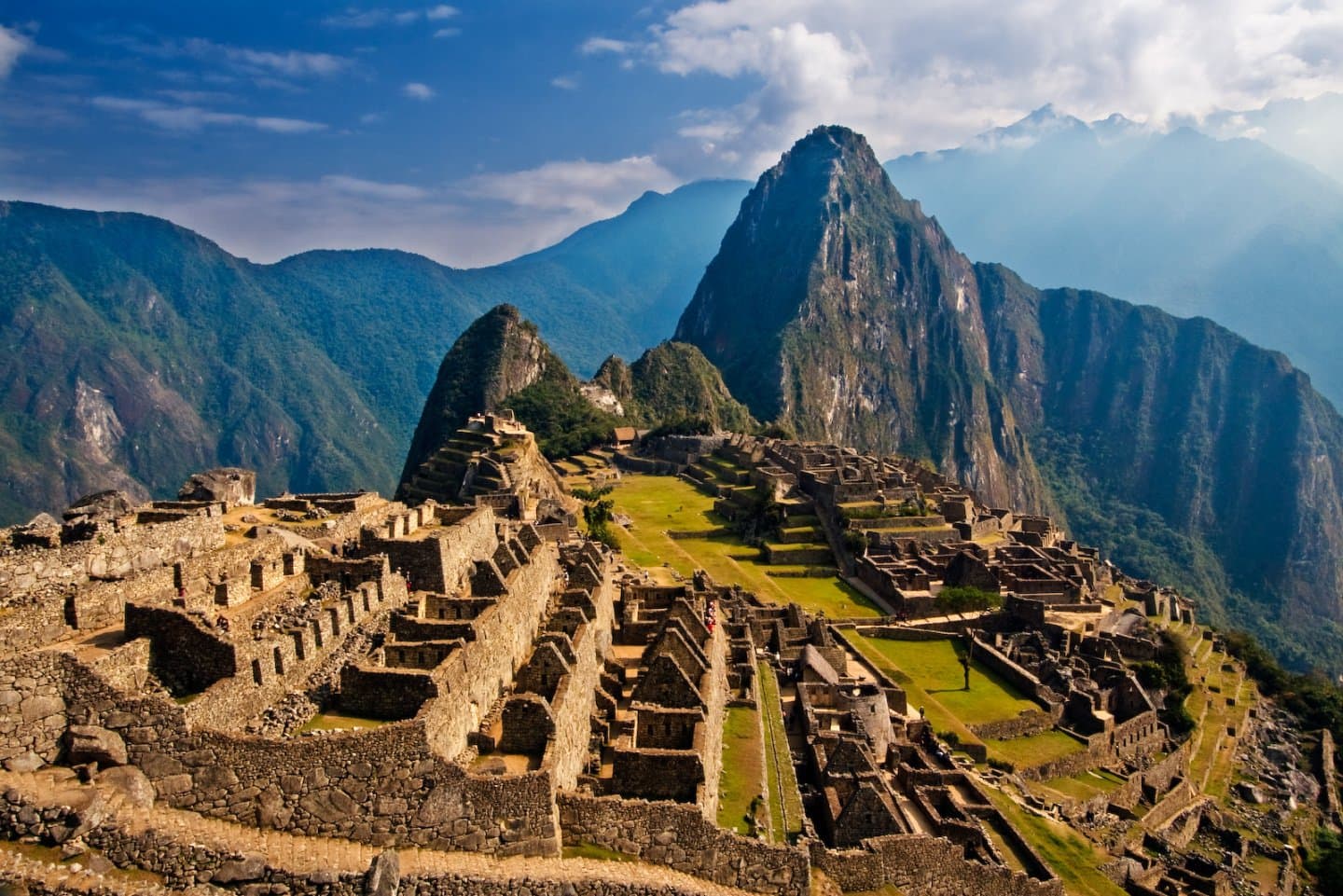
Inca citadel at 2,430 m, abandoned within a century of being built and unknown to the outside world until 1911. Dry-stone masonry so precise the blocks need no mortar.
Machupicchu District, Urubamba Province, Cusco Region, Peru
Peru
c. 1450
Engineering and astronomy fused with a near-impossible mountain setting
Maya-Toltec city on the Yucatán. El Castillo has 365 steps and is aligned so that at the equinoxes a shadow-serpent slides down the northern staircase.
Yucatán Highway 180, Tinúm, Yucatán, Mexico
Mexico
c. 600–1200
A calendar built as a building — Maya astronomy rendered in stone
Shah Jahan's mausoleum for Mumtaz Mahal. Perfectly symmetrical white marble inlaid with semi-precious stone, and it shifts colour with the light through the day.
Dharmapuri, Forest Colony, Tajganj, Agra, Uttar Pradesh 282001, India
India
1632–1653
The high point of Mughal architecture — and a tomb built as a love letter
 TheLysts