- Country
- India
- Origin Story
- Holi is rooted in Hindu mythology, notably the tale of Prahlada and Holika. Prahlada, a devout follower of Lord Vishnu, was persecuted by his father, King Hiranyakashipu, who sought to kill him. The king's sister, Holika, who was immune to fire, attempted to burn Prahlada by sitting with him in a bonfire. However, Prahlada's devotion protected him, and Holika perished in the flames. This story symbolizes the triumph of good over evil and is commemorated during Holi.
- Folklore Type
- Mythological
- Event Date
- Full moon day of Phalguna (March)
- Ritual Significance
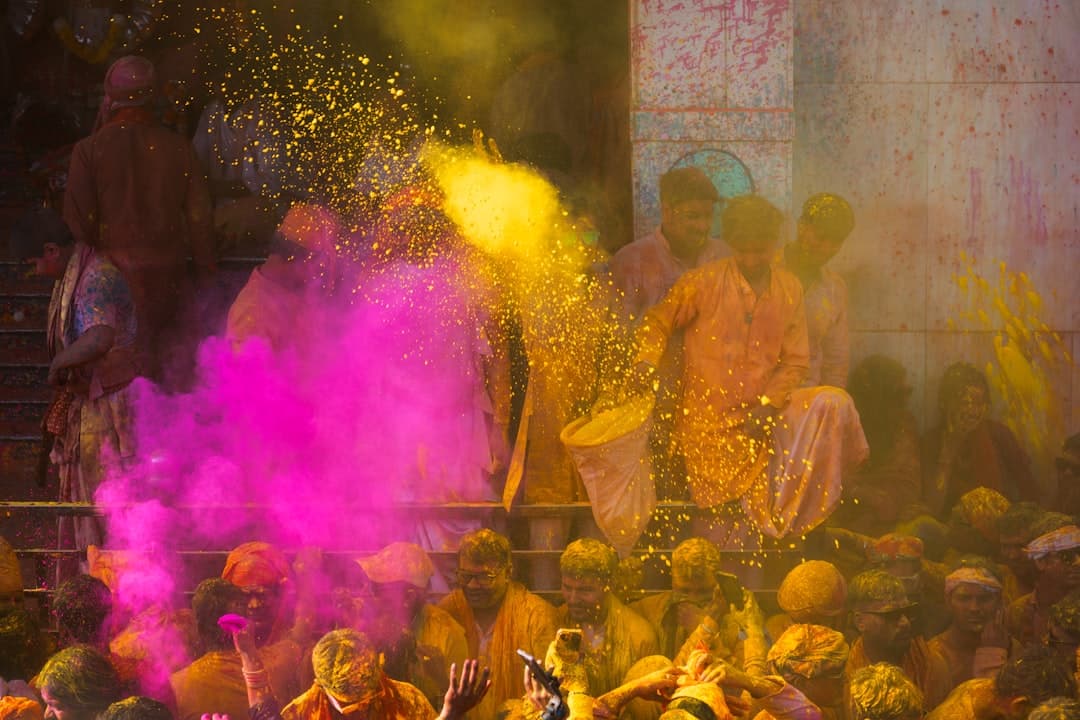
- Holi marks the arrival of spring and celebrates the victory of good over evil. The festival begins with Holika Dahan, where bonfires are lit to symbolize the burning away of evil. The following day, people engage in playful activities, throwing colored powders and water at each other, symbolizing joy, unity, and the vibrant colors of spring.
- Fun Fact
- In the Braj region of India, Holi is celebrated for up to 16 days, with unique traditions such as Lathmar Holi, where women playfully hit men with sticks.
- Duration
- 1-2 days
- Symbol
- Colored powders (gulal) and bonfires
 TheLysts